
Why you forget to drink water at your desk, and what helps
Focus mutes thirst, nothing cues a sip, the glass sits empty and coffee fills the gap. Why desk days run dry, and fixes built on cues, not willpower.
If you get to 3 PM and notice the glass you poured this morning is still half full, that isn't a lack of discipline. Desk work strips out almost every cue that makes people drink. Focus pushes mild thirst into the background, nothing in the day says "drink now", the glass is empty and refilling means getting up, and the coffee mug is already in your hand.
So the fix is not to try harder. It is to put the cues back: water you can see, refills that happen on their own, and sips tied to things you already do. This post goes through why each of those gaps opens up and what closes it.
Focus pushes thirst into the background
Mild thirst is a quiet signal. It doesn't hurt and it doesn't shout, so when your attention is fully on a spreadsheet, a pull request or a tricky email, it gets filtered out along with the hum of the fridge and the ache in your shoulders. Most people know the version of this with hunger: you finish a long task and suddenly realize you are starving. Thirst works the same way, only more quietly.
That filtering is not a flaw. It is the same thing that lets you concentrate in the first place. But it means that the better your focus, the less likely you are to notice you want a drink.
Two things make it worse at a desk:
- Nothing feels like losing water. In a cool office you are not hot or sweaty, so nothing reminds you that you are still losing water all day through breathing and your skin.
- Thirst fades with age. Older adults tend to feel thirsty later and less strongly, which is why they are often advised to drink at set times rather than wait for the feeling.
Nothing in the day says "drink now"
People rarely drink because they decided to. They drink because something prompted it: the kettle, a meal, a colleague heading to the kitchen, a walk past the water cooler, the end of a meeting. Those prompts are cues, and habits run on them. A behavior that keeps following the same cue becomes close to automatic.
Desk work, and remote work in particular, removes a lot of those cues. There is no tea round. Lunch is eaten at the keyboard, if it is eaten at all. Video calls run back to back with no corridor between them, so one ends and the next begins without a pause in which you might pick up a glass. Without a cue, drinking depends on remembering, and remembering is exactly what focus switches off.
The glass is empty and refilling is a trip
An empty glass on the desk is a small decision waiting to be made. To drink, you have to stand up, walk to the kitchen and break your train of thought. So you postpone it until you finish this bit, and this bit turns into two hours.
A few small things add friction:
- The glass is small. A small glass empties after a few sips, so it spends most of the day empty.
- The water is not appealing. Water that was cold at 9 AM is warm and flat by noon.
- It is out of sight. A bottle tucked behind the monitor or in a bag might as well be in another room.
None of these feel like reasons, but together they decide whether you drink.
Coffee fills the gap
For many people the drink on the desk is a mug, not a glass. Coffee and tea do count toward your fluids, so the trouble is not the coffee itself. It is the habit. If every trip to the kitchen ends with another coffee, water never gets its turn, and the extra caffeine can catch up with you at bedtime.
Coffee also has the cues that water lacks. It has a ritual, a smell and a fixed time of day. Water has none of those unless you give them to it.
Meetings and the bathroom
Some people drink less on purpose. Before a long workshop, a client call or a day of back to back meetings, it can feel safer not to need the bathroom. Some don't like drinking on camera. Both are understandable, and both quietly cost you a morning's water.
The answer is timing, not abstaining. Have a proper drink in the gaps between calls, a glass before the meeting starts rather than a liter, and a refill right after it ends. You get the water without the mid-meeting dash.
Fixes built on cues, not willpower
Since the problem is missing cues and small bits of friction, the fixes are about your surroundings. None of them asks you to remember harder.
Keep water in sight and in reach
Put a full glass or bottle on the desk where your eyes land, not behind the screen. A spot just to the side of the keyboard works well. A clear bottle shows you how much is left, which is a cue in itself. A bigger bottle means fewer trips, and fewer trips means fewer chances to put it off.
Make refilling automatic
Take the bottle with you every time you get up for anything: the bathroom, a coffee, the door. Fill it before you sit back down. If you work from home, fill two bottles in the morning so the second one is waiting when the first runs out.
Tie sips to things that already happen
Pick two or three moments that happen several times a day and attach a drink to each:
- When a call ends, take a few sips before you open the next thing.
- When you send a long email or a finished piece of work, drink.
- While something is loading, exporting or building, drink.
- Before each coffee, have a glass of water first.
Psychologists call plans in this "when this happens, I'll do that" shape implementation intentions, and research generally finds they make people more likely to follow through than a vague intention like "drink more". The trick is to choose cues that really do happen every day. For a longer look at building this into a lasting routine, see making drinking water a habit at your desk.
Make water nicer to drink
Many people find cold water easier to drink than lukewarm, so a bottle that keeps it cold can help, and a slice of lemon or cucumber gives it some taste without sugar. Sparkling water counts too.
Let something outside your head do the remembering
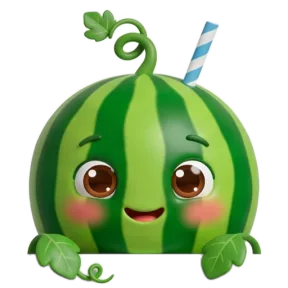
Your attention is the thing that lets you down, so give the remembering to something that isn't busy. In Notchpals that job belongs to the Water characters: Puddle, a fluffy seal pup, or Melo, a watermelon, whichever one you put in your crew. Now and then it slides down from the notch and suggests a drink.

PuddleWater break! I'll balance the glass on my nose. You just drink it.
The useful part is when it turns up. Nothing from the crew appears while your microphone or camera is on, so a water visit never lands in the middle of a stand-up. It waits for the gap after the call, which is the cue the meetings section said was missing. The first glass comes once in the morning, between 8 and 11 AM, a quarter of an hour after you sit down. The regular reminder runs from 9 AM to 8 PM, and a separate afternoon visit lands between 2 and 5 PM, when coffee usually wins.
How often the regular one appears comes down to a single choice in Settings, Calm, Normal or Chatty, and that allowance covers every repeating reminder your crew has, so water turns up a handful of times a day rather than every few minutes. Press Done when you have had a drink. Press Later, or just ignore it, and you get one more try 20 minutes later; a second Later lets that one go. If you would rather use Apple's own tools, setting a water reminder on a Mac walks through Reminders, Calendar and Shortcuts.
Start with one cue
You don't need every fix at once. Pick the one that matches your worst gap. If the glass is always empty, get a bigger bottle and refill it on every trip. If you forget entirely, tie a sip to the end of each call. If coffee is crowding water out, put a glass of water before each cup. Give it a week, see whether the 3 PM glass is emptier than it used to be, and add a second cue once the first one runs on its own.
More on water
 WaterDoes coffee count as water? What the evidence saysCoffee and tea count toward your fluids, despite caffeine's mild diuretic effect. How much is sensible, when to swap a cup for water, and timing for sleep.
 WaterHow much water should you drink at work?The eight glasses rule, what health bodies actually advise, why your needs change with heat, exercise and size, and a simple plan for the workday.
- WaterSpilled water on a MacBook: what to do, and how to prevent itThe calm, exact steps to take if you spill a drink on a MacBook, what not to do (no rice, no hair dryer), and how to keep water on your desk safely.